
Photography has always balanced between truth and illusion. As artificial intelligence reshapes our visual world, the question of what is real becomes more urgent than ever.
More and more we live in a digital world, constantly asking ourselves what is real and what is artificially generated. Many people experience that reality check as unsettling, a side effect of the exponential growth of AI as a tool for creating images. This development feels new and revolutionary, and to some extent it is, but at its core it is not entirely unprecedented. When it comes to texts and opinions, we have always had to ask whether something was true or false. Responsible citizens used to leave that judgment to a news outlet whose political views aligned with their own.
We also struggle increasingly with the idea that opinions are, by their very nature, always true for the person who expresses them. Expressing an opinion that does not align with the broader social consensus is more and more often treated as a crime, even though an opinion does not have to be based on facts.
Scientists take pride in their pursuit of irrefutable facts, yet they must regularly revise their theories. Once upon a time, the sun was said to revolve around the earth, and now we know it is the other way around. People were burned at the stake for defending that idea. In the Middle Ages, physicians believed bloodletting was healing; today we have new methods of curing that will undoubtedly be replaced by others in due time.
Many people agree that images, especially when related to news, should not be manipulated. That is a defensible position, but it is worth remembering that as human beings we do not have a particularly strong bond with objective reality or even with truth itself.
Much of our behavior is actually built around concealing reality. When we share a birthday on social media, it was always a wonderful evening. We post the best photos and leave out the part about two relatives getting unpleasantly drunk. The father-in-law who spent the night making racist remarks goes unmentioned, as does the aunt who threw up in the Ming vase because the bathroom was occupied.
We go to the gym for our health, but mostly to look attractive for others. We draw constant parallels with Nazi Germany in the 1930s, but conveniently forget that gyms and Körper Kultur were immensely popular in that era too.
Truth and reality are concepts we pursue only when it suits us.
So why this reflection on reality on a website like allnikons.com, which focuses mainly on analog cameras?
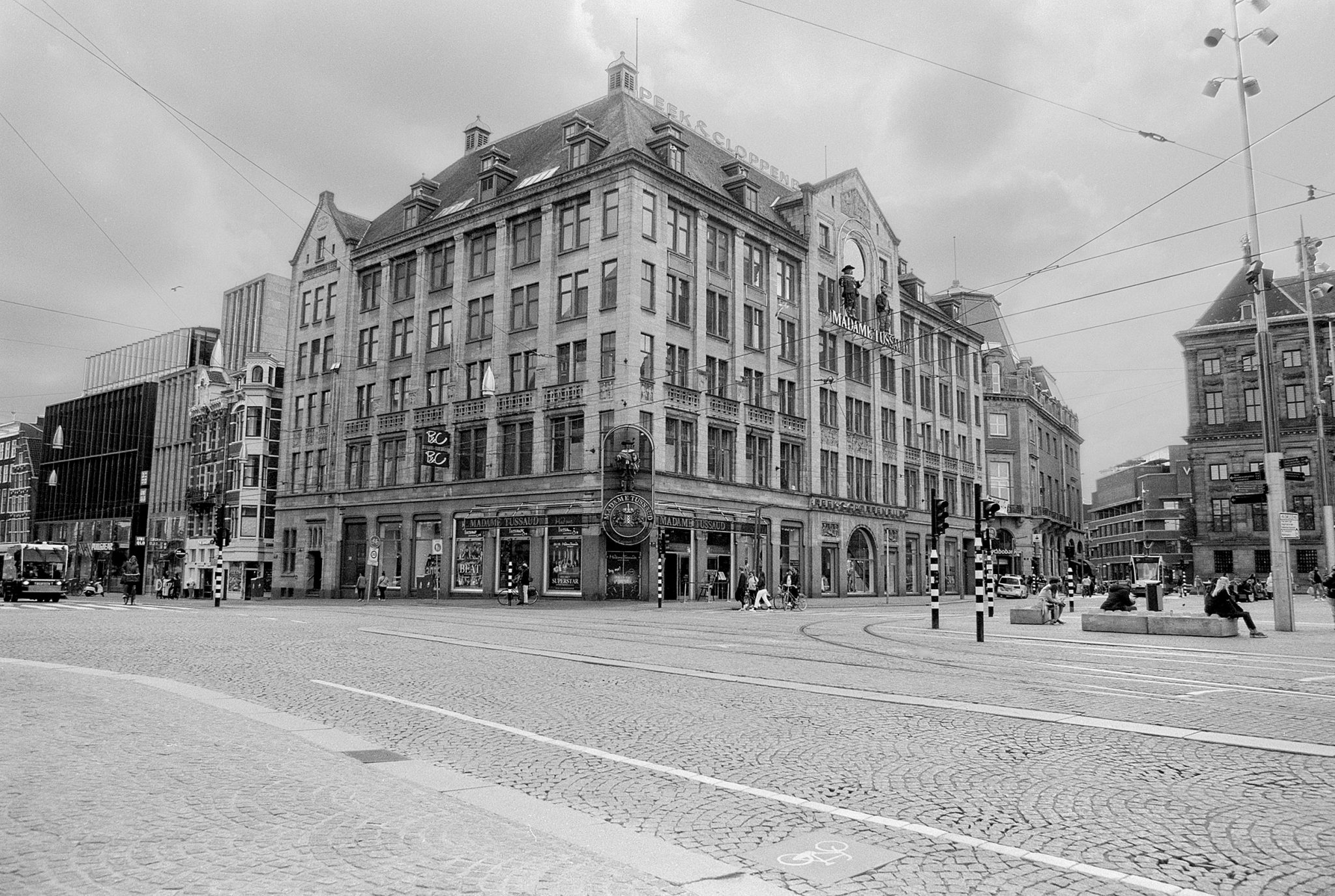
The answer is actually quite simple: analog cameras provide a relatively neutral starting point when it comes to capturing reality. Their first result is always an unmanipulated image in the form of a negative or a slide.
Does that mean we have captured reality? Unfortunately not. A skilled photographer can use light or the focal length of lenses to create an image that strays even further from reality than a one-to-one copy of a document.
The pleasure of working with analog photography lies in the craftsmanship it requires. Playing with light and chemicals at least allows us to forget our smartphones for an hour or more, focusing entirely on our own process rather than consuming what others have created. Whether we will ever feel a genuine need for truth or reality, that remains a question for humankind.
Hans van der Kamp
Written for allnikons.com, a space devoted to the craft, culture and continuity of analog photography.