NorthCam
There is something reassuring about picking up a Nikon F, F2 or F3 and realising that a camera built decades ago can still do exactly what it was designed to do: take photographs. These cameras were made to work, and many of them have survived years of professional use, travel, bad weather and less-than-gentle treatment.
But even a classic Nikon occasionally needs more than admiration.
NorthCam, based in Makkum in the north of the Netherlands, specialises in the maintenance, repair and overhaul of analogue cameras and lenses, with particular expertise in classic Nikon equipment. The workshop services Nikon F, F2 and F3 bodies, as well as the FM, FM2, FE, FE2, FG and FA, Nikon S-series rangefinders and Nikkor lenses.
And this is not simply a matter of opening a camera, cleaning a few parts and hoping for the best.
Measuring instead of guessing
A mechanical camera may sound perfectly healthy while its shutter speeds tell a different story. A light meter can appear convincing without actually being accurate. And an otherwise excellent lens is of little use when focus is not where it is supposed to be.
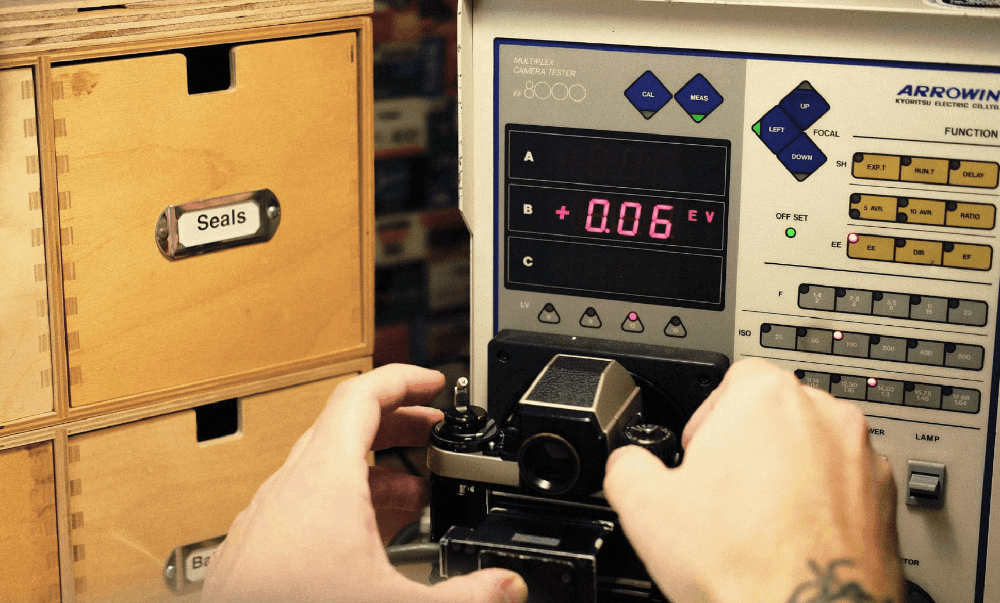
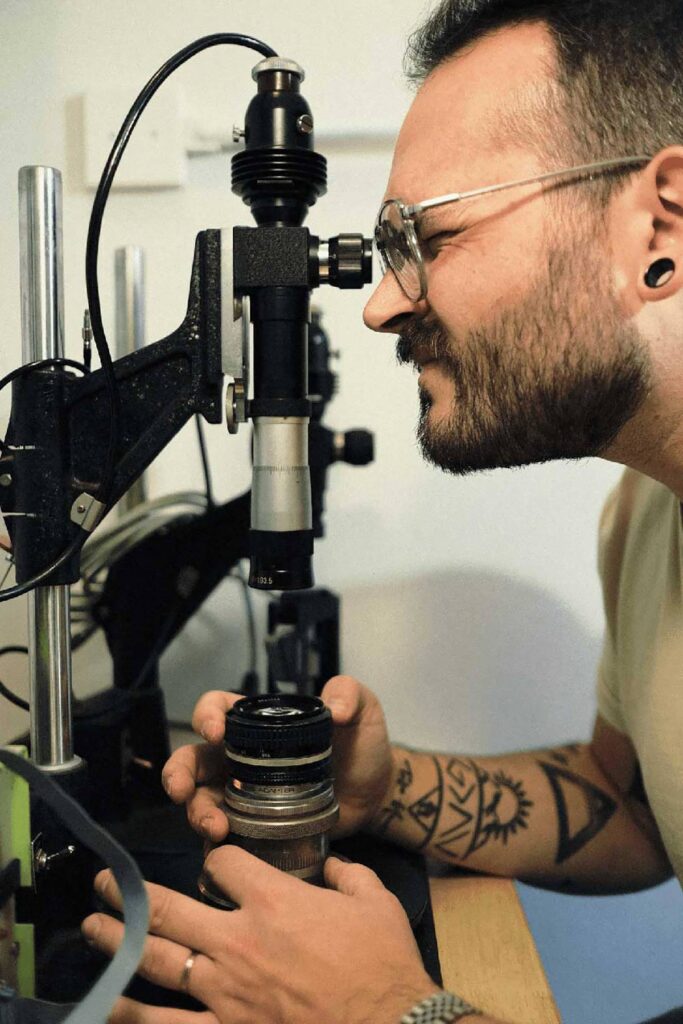
NorthCam therefore uses professional test and calibration equipment, including Kyoritsu shutter-speed and Multiplex camera testers, calibrated light sources and auto- and infinity collimators. Flange-focal distance, lens-mount parallelism and other mechanical tolerances can also be checked and adjusted.
Much of this is professional equipment from the period in which the cameras themselves were designed. Combined with original factory and specialised tools, it allows a repair to go considerably further than simply getting an old camera working again: the objective is to bring it back within its original specifications.
From a light seal to a complete overhaul
Not every Nikon needs a complete rebuild. NorthCam offers anything from inspection and diagnosis, replacement of deteriorated light seals and individual repairs to regular servicing and complete camera overhauls.
During a full overhaul the camera is dismantled, moving components are cleaned and lubricated and worn parts can be replaced. The finished camera is then tested and calibrated before being returned to its owner.
Lenses receive the same treatment. Stiff focusing, oily aperture blades, haze and fungus can be addressed, after which the optics can be checked and adjusted using a collimator or optical test setup.
There is even an interesting service for photographers who want to combine different generations of Nikon equipment. Subject to availability, NorthCam can convert suitable pre-AI Nikkors using original Nikon AI conversion kits.
Cameras were made to take photographs
Perhaps the best argument for maintaining an old Nikon is also the simplest. A Nikon F or F2 was never intended to spend its retirement on a bookshelf, and an F3 does not become a better camera by being admired through the glass of a display cabinet.
They were built to be used.
NorthCam maintains a stock of new and used spare parts and concentrates exclusively on analogue equipment. No digital cameras, no autofocus cameras and no point-and-shoots: the workshop is dedicated to the mechanical and electronic film cameras and lenses for which repair remains both possible and worthwhile.
A classic Nikon may have been built to last. That doesn’t mean it should have to survive fifty years without a little professional attention.
And once properly serviced, there is no reason to stop putting film through it.
Give your camera some much needed love at Northcam.tech